Imagine a world where plants can’t decide if they want to be land lovers or water enthusiasts. Welcome to the quirky realm of semi-aquatic plants! These fascinating green wonders thrive in the delightful limbo between wet and dry, proving that nature has a sense of humor. Whether they’re lounging by the water’s edge or dipping their roots in a puddle, semi-aquatic plants add a splash of life to gardens and landscapes.
Semi Aquatic Plants
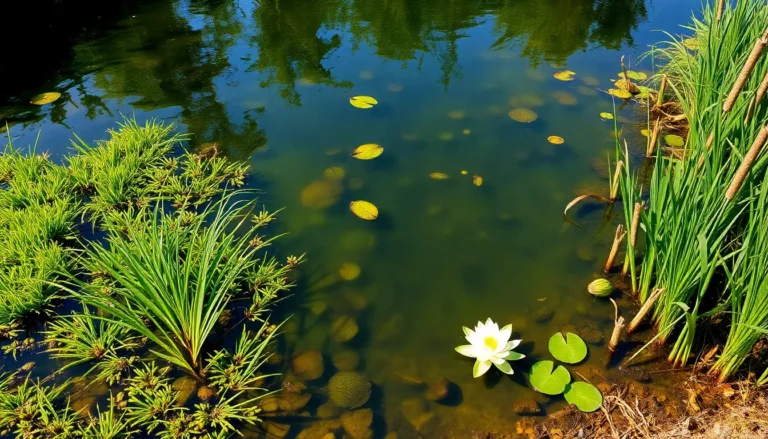
Semi-aquatic plants thrive in environments that merge land and water, showcasing remarkable adaptability. This unique category includes species that can grow submerged in water or emerge above the surface. Common examples of semi-aquatic plants encompass cattails, water lilies, and rushes. Each species plays a critical role in their ecosystems, providing habitats for various wildlife and improving water quality.
Adaptations in semi-aquatic plants facilitate survival in fluctuating moisture levels. Some plants possess specialized roots that allow them to anchor in both soil and sediment. Many exhibit waxy leaves to reduce water loss during dry periods. These adaptations enable semi-aquatic plants to maintain their growth and health in diverse conditions.
Landscapers frequently incorporate semi-aquatic plants into garden designs to enhance aesthetics and biodiversity. They offer vibrant colors and unique textures, contributing to an inviting environment. Through their presence, these plants create opportunities for wildlife interactions and promote ecological balance.
Cultivation of semi-aquatic plants requires consideration of specific growing conditions. Adequate sunlight, soil type, and water depth significantly impact their growth. Many thrive in full sun and prefer nutrient-rich soil, though others are more forgiving in terms of light and soil requirements.
Awareness of local ecosystems fosters effective planting strategies. Observing native semi-aquatic species can inform selection for enhancing local biodiversity. Understanding the needs of these plants contributes to successful gardening and conservation efforts.
Characteristics of Semi Aquatic Plants
Semi-aquatic plants exhibit unique traits that enable them to thrive in environments where land meets water. They incorporate various adaptations, growth patterns, and lifecycles suited to these transitional zones.
Adaptations for Life in Water and Land
Specialized roots anchor semi-aquatic plants in soil while absorbing nutrients from water. Thick, waxy leaves reduce water loss and protect against both flooding and drought. Some species develop air-filled tissues, allowing them to float and access sunlight. These modifications enable survival in fluctuating moisture and light conditions. Species such as water lilies showcase broad leaves that extend above water, maximizing photosynthesis. Other plants may possess flexible stems, allowing them to sway with currents, ensuring stability.
Growth Patterns and Lifecycles
Growth patterns vary among semi-aquatic plants, with some demonstrating rapid expansion during favorable seasons. Many begin as submerged seedlings before emerging above the water’s surface. Lifecycles often adapt to seasonal changes, resulting in blooming events that coincide with warm weather. Cattails, for instance, produce flowering spikes in late spring, attracting pollinators. The ability to regenerate allows these plants to thrive after disturbances, such as flooding. Each plant contributes to a dynamic ecosystem, with growth and reproduction playing crucial roles in maintaining habitat stability.
Popular Types of Semi Aquatic Plants
Semi-aquatic plants offer a range of varieties that enhance any landscape. The following sections detail some of the most popular types.
Water Lilies
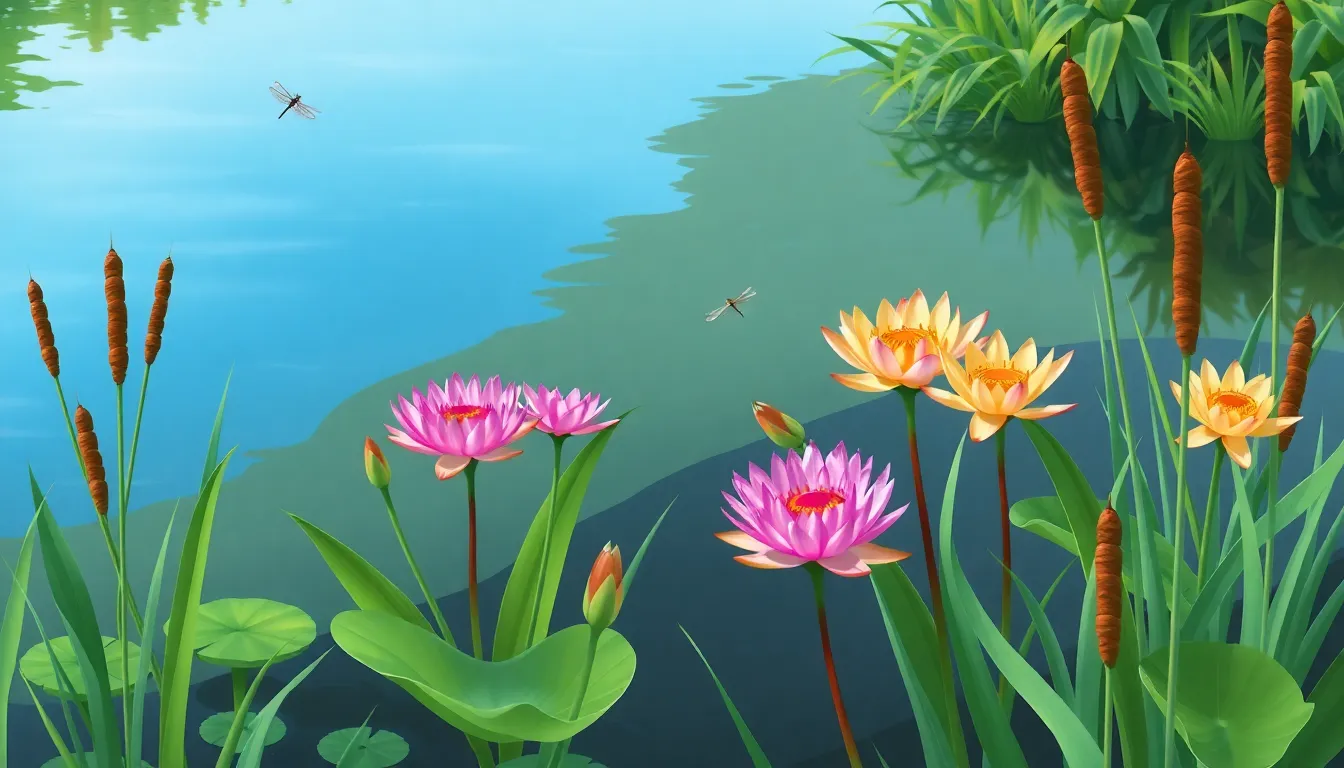
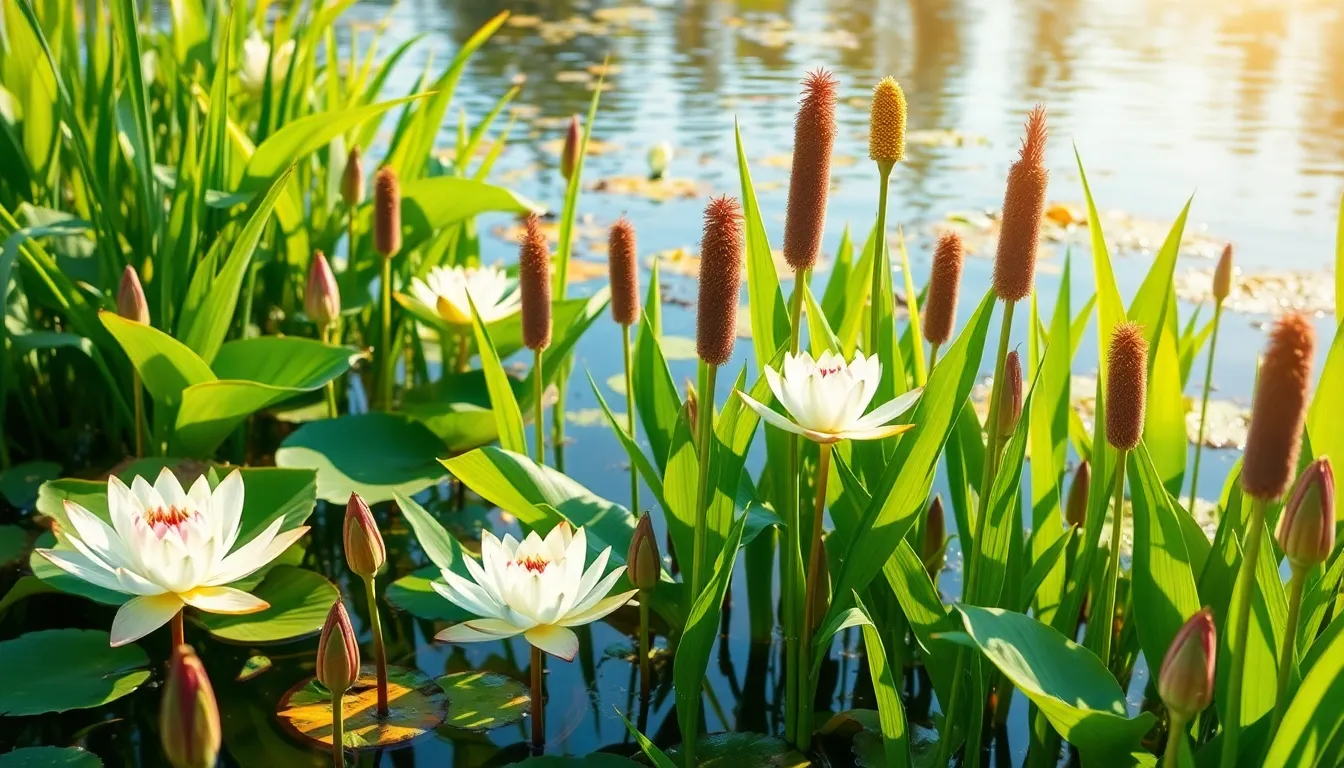
Water lilies thrive on the surface of ponds and lakes, creating stunning visual displays. Their large, flat leaves provide floating platforms for photosynthesis, while their vibrant blooms attract pollinators like bees and butterflies. These plants prefer still waters with a depth of 12 to 24 inches. Varieties include white, pink, and blue species. Water lilies excel in providing shade, which helps to prevent algae growth. They also contribute to water quality by absorbing nutrients and producing oxygen.
Cattails
Cattails grow along the edges of freshwater habitats, featuring tall, slender stalks that can reach heights of 10 feet. The dense stands of cattails provide crucial shelter for animals such as birds and small mammals. Their distinctive brown flower spikes emerge in late spring, enhancing visual interest. Ideal planting areas include wetlands or marshes with shallow water conditions. Cattails adapt readily to fluctuating moisture levels, making them resilient. They also play an important role in stabilizing soil and improving water quality through nutrient absorption.
Reed Grass
Reed grass serves as another prominent semi-aquatic plant, commonly found in wetland areas and along riverbanks. Known for its tall, feathery plumes, this grass can grow up to 6 feet tall, creating a beautiful backdrop in gardens. Reed grass thrives in moist soil and provides habitat for various wildlife, including insects and birds. It effectively filters runoff, improving water clarity and quality. Varieties like common reed and giant reed can adapt to diverse environments. Incorporating reed grass promotes ecological balance by enhancing biodiversity and stabilizing shorelines.
Benefits of Growing Semi Aquatic Plants
Growing semi-aquatic plants provides numerous advantages for both environments and landscapes. These plants adapt easily to their conditions and can significantly enhance ecological balance while offering visual appeal.
Environmental Impact
Semi-aquatic plants play a crucial role in ecosystem health. They filter pollutants and improve water quality, which supports aquatic life. Their roots stabilize soil, reducing erosion along waterways. Moreover, these plants provide habitats for various wildlife species, promoting biodiversity. In addition, they contribute to carbon sequestration, helping to mitigate climate change. By enhancing local ecosystems, semi-aquatic plants show their importance beyond mere aesthetics.
Aesthetic Value in Landscapes
Incorporating semi-aquatic plants into landscapes adds vibrant colors and varied textures. They create dynamic focal points in gardens, attracting attention with their lush foliage and unique blooms. Water lilies float gracefully on pond surfaces, while cattails produce striking flower spikes that sway gently in the breeze. Landscapers appreciate the versatility these plants offer, as they can thrive in wet areas and enhance the overall beauty of outdoor spaces. The presence of semi-aquatic plants cultivates a natural ambiance that complements both formal and informal garden designs.
Conclusion
Semi-aquatic plants are a remarkable addition to any garden or landscape. Their unique ability to thrive in both land and water environments not only enhances visual appeal but also supports ecological health. By incorporating these plants into designs, gardeners can promote biodiversity and create vibrant ecosystems.
Their roles in filtering pollutants and providing habitats for wildlife cannot be overstated. As they adapt to fluctuating moisture levels, they offer resilience and beauty throughout the seasons. Understanding the specific needs of semi-aquatic plants can lead to successful cultivation and a flourishing environment that benefits both nature and aesthetics. Embracing these plants is a step toward a more sustainable and visually captivating landscape.
Olivia Wang
Olivia Wang is a passionate urban gardening advocate who brings a fresh perspective to small-space cultivation and indoor gardening solutions. Her writing focuses on container gardening, vertical growing systems, and practical ways to create thriving gardens in limited spaces. With a keen interest in Asian herbs and vegetables, Olivia shares unique insights into growing traditional Asian crops in Western climates.
Known for her clear, step-by-step approach, Olivia makes complex gardening concepts accessible to beginners while offering innovative techniques for experienced gardeners. Her articles blend practical advice with creative solutions for modern gardening challenges. When not writing or tending to her own urban garden, Olivia experiments with hydroponic systems and explores local community gardens for inspiration.
Through her engaging writing style, she helps readers transform their living spaces into productive, beautiful gardens, regardless of size constraints.